It's easy to fall into the trap of thinking that more study time automatically means better grades or faster learning. We've all seen the late-night warriors, fueled by caffeine, clocking in marathon study sessions. But what if I told you that approach is often counterproductive? The research is pretty clear: quality beats quantity when it comes to learning. Grinding for hours might feel productive, but it can lead to burnout, reduced retention, and ultimately, wasted time.
How much time should you spend studying daily?
You should aim for shorter, more frequent study sessions rather than long, infrequent ones, as research consistently shows this approach significantly improves retention and reduces mental fatigue. While there's no magic number that works for everyone, many studies suggest that roughly 30 to 60 minutes of focused study per subject, broken up by short breaks, is often ideal.
Our brains aren't built for endless information absorption. Just like a muscle, your brain needs recovery time. When you push too hard, you hit a wall of diminishing returns. Studies on memory consolidation, for instance, highlight that the brain processes and stores new information best in chunks, followed by periods of rest. This is why cramming for an exam rarely leads to deep, lasting understanding. Instead, you end up with superficial recall that fades quickly. Think of it like trying to fill a leaky bucket; constant pouring won't help if you don't give the water time to settle.
What is the Pomodoro Technique?
The Pomodoro Technique is a time management method that uses a timer to break down work into focused intervals, traditionally 25 minutes in length, separated by short breaks. Developed by Francesco Cirillo in the late 1980s, it's a simple yet powerful way to improve focus and manage cognitive load.
Here's how it works: you pick a task, set a timer for 25 minutes, and work with intense focus until the timer rings. No distractions, no checking your phone. When the timer goes off, you take a short 5-minute break. After four "Pomodoros" (four 25-minute study sessions), you take a longer break, typically 15-30 minutes. This structure helps you stay on task, reduces the feeling of being overwhelmed, and ensures you get regular mental breaks. Many people find this method helps them maintain concentration for longer periods without feeling drained. If you struggle with maintaining focus, this technique can be a game-changer. You can learn more about techniques to sustain concentration in our post about how to actually focus while studying.
Why is spaced repetition effective?
Spaced repetition works because it shows you information right before you are about to forget it, strengthening your memory recall over increasing intervals. This method is based on the "forgetting curve," a concept introduced by Hermann Ebbinghaus, which illustrates how we forget information over time if we don't actively review it.
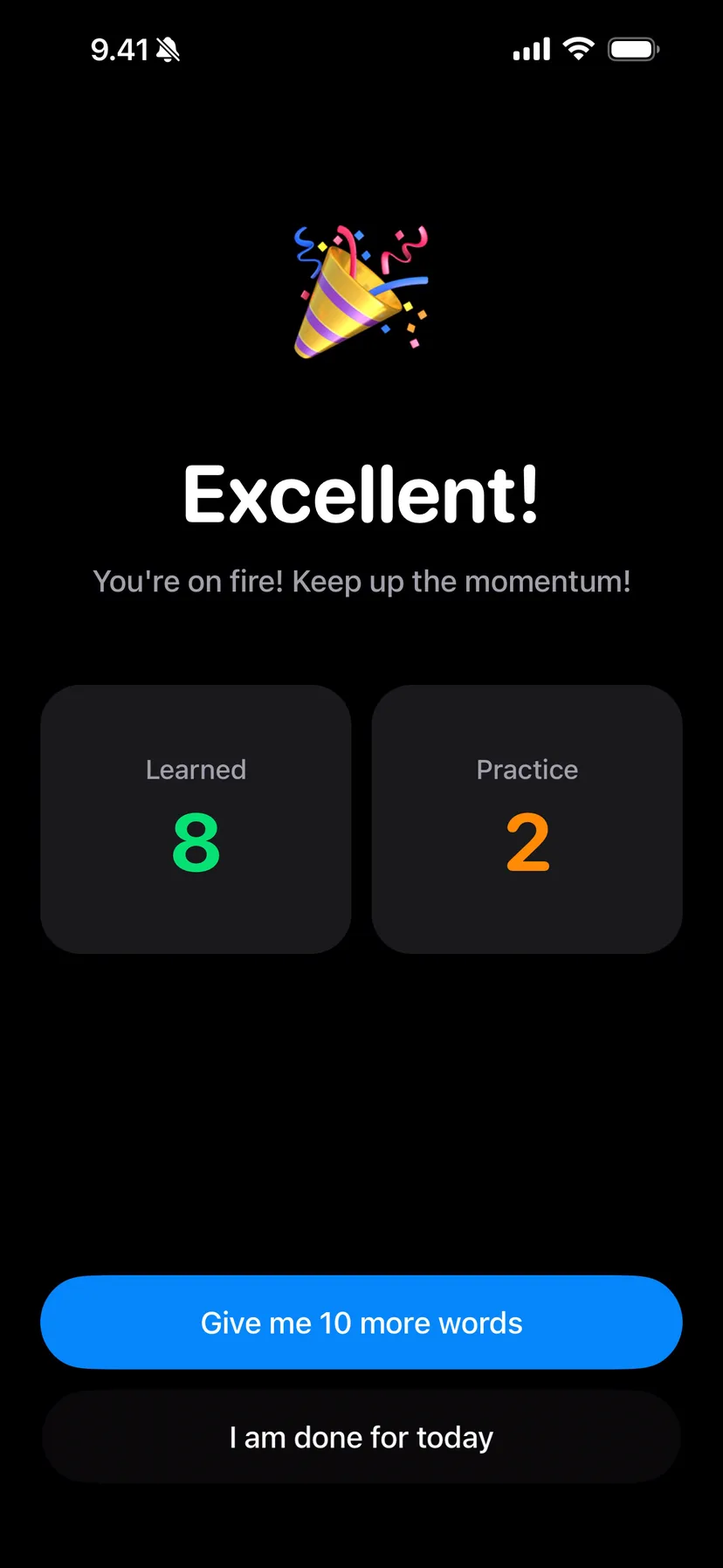
Instead of reviewing everything every day, a spaced repetition system (SRS) like the one built into Vocabbie, a language-learning app for iPhone, Android and the web, tracks your performance and schedules reviews for items you find harder more frequently, and items you know well less frequently. For example, if you consistently nail a flashcard, you might not see it again for a few days, then a week, then a month. If you struggle with one, you'll see it again sooner. This personalized approach makes your study time incredibly efficient, ensuring you're only spending time on what you actually need to review. It’s a core reason why your brain needs spaced repetition for long-term memory.
What about active recall?
Active recall is the process of retrieving information from memory without external cues, and it is far more effective for long-term retention than passive review methods like re-reading or highlighting. When you actively try to remember something, you're not just passively absorbing information; you're testing your memory and strengthening the neural pathways associated with that knowledge.
Flashcards are the quintessential active recall tool. Instead of just reading a definition, you see a prompt and have to produce the answer from scratch. This mental effort is what makes learning stick. Studies have repeatedly shown that active recall leads to significantly better retention than simply reviewing notes. For instance, a 2011 study by Roediger and Karpicke found that students who practiced active recall through testing remembered significantly more information than those who only re-read the material. This directly counters the myth that just looking at your notes again is enough. To understand this difference better, read our article on passive review vs active recall: why one works and one does not.
Putting it all together: your daily study plan
So, what does this mean for your daily study routine? It means aiming for consistency and quality over arbitrary hours. Instead of planning a 3-hour block, try to fit in two or three 25-minute Pomodoro sessions throughout your day, focused on different subjects or topics.
Here's a practical example:
- Morning (25-30 mins): Review your Vocabbie flashcards for a specific subject (e.g., French vocabulary or medical terms). The AI will ensure you're practicing active recall with spaced repetition.
- Afternoon (25-30 mins): Work on a specific problem set or read a chapter, using the Pomodoro method to stay focused.
- Evening (25-30 mins): Revisit another set of flashcards or quickly summarize what you learned in the afternoon.
The key is to integrate these short, highly focused, and effective methods into your day. You'll find that 90 minutes of smart, strategic studying often accomplishes more than several hours of unfocused effort. Prioritize consistency and effective techniques, and you'll see real progress without the unnecessary stress of endless hours.