Most of us have a favorite study method, and it usually involves deep dives into one topic at a time. We pick a chapter, read it, do all the practice problems related to it, and move on. It feels good. It feels productive. You feel like you're mastering the material, building momentum, and really "getting it."
Here's the problem: that feeling is often a mirage. You might be getting good at that specific type of problem in that specific context. But when the test comes, and problems are mixed together, you might find yourself stumbling. You know the material, but you can't figure out which solution to apply.
This is where interleaving comes in, and it's the study technique that most people either never hear about or actively avoid because it feels less satisfying in the moment.
What is interleaving?
Let's start with what most people do: blocked practice. Imagine you're learning about three types of calculations in math. With blocked practice, you'd do all 20 problems for Type A, then all 20 for Type B, then all 20 for Type C. You learn a method, practice it until you're fast, then switch. This creates a sense of immediate fluency.
Interleaving flips that on its head. Instead of blocking, you mix the problem types within a single study session. You might do a Type A problem, then a Type C problem, then a Type B problem, then back to A. You're constantly switching gears, forcing your brain to identify what kind of problem it is before attempting to solve it.
This isn't just for math. If you're studying history, instead of spending two hours on World War I, then two hours on the Cold War, try mixing them. Read about a WWI event, then a Cold War event, then a key figure from the French Revolution. For language learning, instead of drilling all your irregular verbs for an hour, mix in some vocabulary review, a bit of sentence translation, and then back to verbs.
Why it feels harder (and less productive)
The initial discomfort of interleaving is real. When you're constantly switching, you don't get that smooth, satisfying feeling of mastery over one specific skill. You might feel slower, make more mistakes, and generally feel less competent. This "fluency illusion" is powerful. Your brain prefers the easy path, the immediate reward of recognizing a pattern and applying a learned solution. Blocked practice gives you that.
Interleaving doesn't. It demands more effort. Each time you switch from one type of problem or subject to another, your brain has to perform a retrieval task, pulling different information from memory. Then, it has to discriminate. It needs to look at the new problem, identify its characteristics, and choose the correct strategy from a toolkit of possibilities. That's hard work. It feels like you're not making rapid progress because you're constantly challenged to adapt.
Why it works better (for actual learning)
Despite the immediate discomfort, research consistently shows that interleaving leads to better long-term retention and improved ability to apply knowledge in new situations. Here's why:
First, it forces discrimination. The real world doesn't neatly label problems for you. A doctor doesn't get a sign that says "This patient has a bacterial infection, apply Solution X." They have to examine symptoms, make a diagnosis, and then decide on treatment. Similarly, a mechanic doesn't get a sticker saying "This is an electrical issue, check the battery." They listen, observe, and troubleshoot. Interleaving trains your brain to identify the problem type before trying to solve it. This is a higher-order thinking skill that blocked practice mostly ignores.
Second, it naturally incorporates retrieval practice. Every time you switch subjects or problem types, you're performing a mini-retrieval event. You're pulling information out of your long-term memory, which strengthens the neural pathways for that information. It's like exercising a specific muscle; the more you retrieve, the stronger the memory becomes.
Third, it builds adaptability. When you learn how different concepts relate to, or contrast with, each other, you form a richer, more flexible understanding. You don't just know how to solve a quadratic equation; you know when to solve a quadratic equation, and how it differs from a linear one. This makes your knowledge more robust and applicable across various contexts.
How to actually interleave in your studies
You don't need to jump wildly from quantum physics to ancient poetry. There needs to be some logical grouping or conceptual connection for interleaving to be most effective.
For example, if you're studying different types of statistical tests, interleave problems that require different tests but use similar data types. For history, mix periods that share common themes like revolutions or technological shifts.
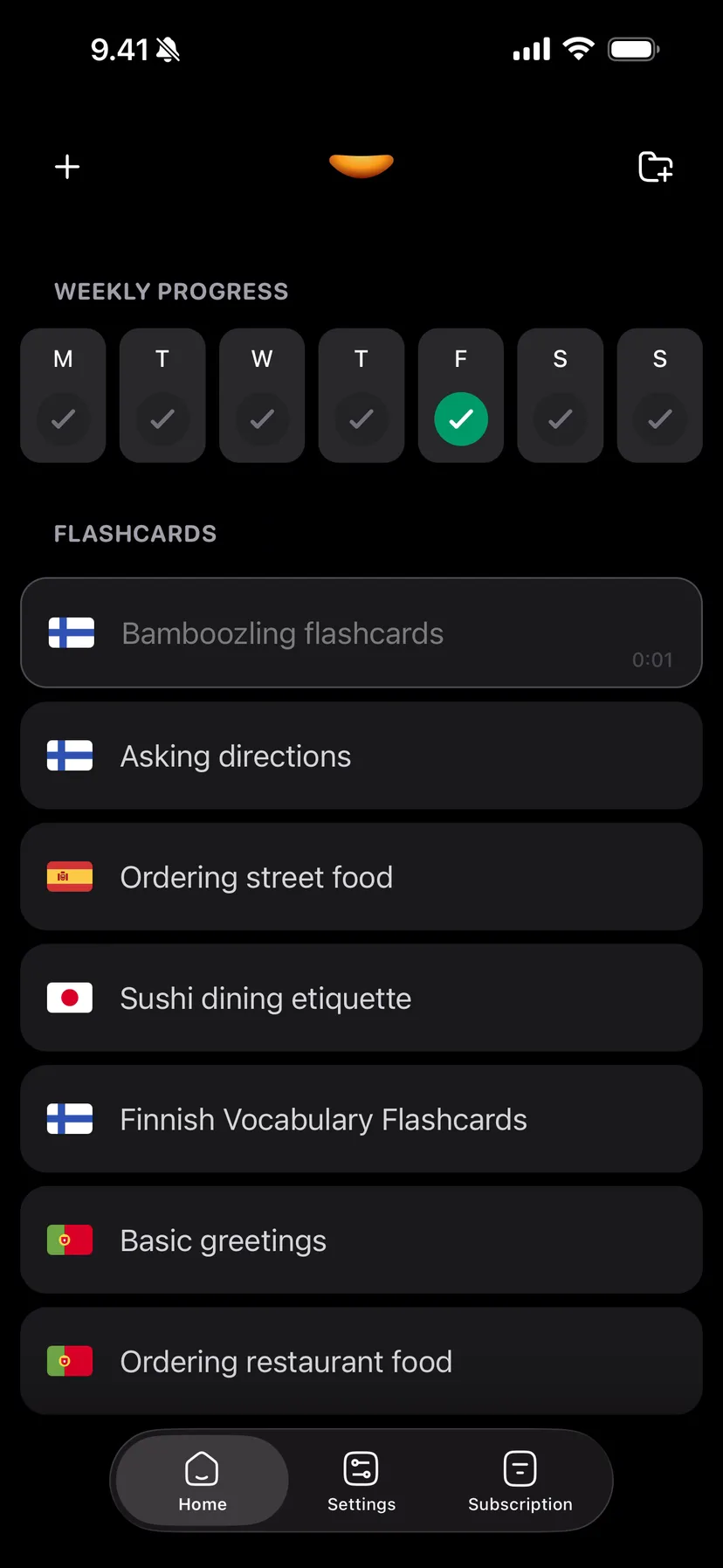
If you're using flashcards, which are already fantastic for retrieval practice, interleaving happens naturally when you mix different decks or topics. This is where an app like Vocabbie really shines. When you create multiple lists for different subjects or types of information, Vocabbie’s smart algorithms can mix them up for you. Instead of just drilling one list until it's "mastered," Vocabbie can present cards from your chemistry terms, then a few from your Spanish verbs, then back to chemistry. This provides the kind of mixed, spaced retrieval that truly cements knowledge.
A good approach might be to start with some blocked practice to grasp the fundamentals of a new concept. Once you understand the basics, introduce interleaving. Don't throw yourself into the deep end immediately, but gradually increase the variety.
Embrace the initial feeling of struggle. It's not a sign that you're failing; it's a sign that your brain is working harder and forming stronger, more versatile connections. True learning often feels uncomfortable in the moment. The goal isn't to feel smart while you study, it's to be smart when it truly counts. Give interleaving a try, and you might just find that your knowledge sticks longer and applies more broadly than ever before.