The MCAT is not a test you can cram for. The volume alone makes that impossible. You're covering organic chemistry, biochemistry, psychology, sociology, biology, physics, and reading comprehension, all at a level deep enough that recognition isn't enough. You need to be able to recall and apply. That's a fundamentally different cognitive task.
Flashcards are one of the few study tools that actually train recall rather than just recognition. But the way most people use them for the MCAT is wrong, and it shows in their score.
Why Anki became the MCAT tool of choice
Anki's reputation in the pre-med world is well earned. It uses spaced repetition, which means cards you find hard come back sooner, and cards you know well get pushed further out. Over months of studying, this compounds in a way that straight rereading never will. The algorithm does a decent job of keeping hard material fresh without drowning you in review.
That's the pitch. And it works, when you use it right.
The Anking problem
Anking is a massive pre-made Anki deck built specifically for the MCAT and Step 1. It's comprehensive. Thousands of cards, community-vetted, constantly updated. And for a lot of people, it becomes a trap.
The issue is passive review. You open a pre-made card, you read the front, you think you vaguely know the answer, you flip it, you see you were right-ish, you hit "Good", and you move on. That's not studying. That's scrolling. The fact that it looks like studying is what makes it dangerous.
Pre-made decks also cover everything, which sounds good until you're spending review time on material you already know cold while the stuff you actually struggle with gets buried. They weren't made from your weaknesses. They were made for the average student.
Making your own cards is better, and here's why
There's a well-documented phenomenon called the generation effect: information you produce yourself sticks better than information you passively receive. When you sit down to write a flashcard, you have to think about what the key point actually is. You have to decide what to put on the front. That decision process is itself a form of encoding.
This doesn't mean you should ignore pre-made resources entirely. Anking is useful for filling gaps, for finding phrasings you wouldn't have thought of, for coverage checking. But your primary deck should come from your own notes, your own wrong answers on practice passages, your own confusion.
What to make cards for
Mechanisms work well as flashcards. Not "what is the Krebs cycle" (too big), but "what enzyme converts pyruvate to acetyl-CoA" or "why does high altitude cause respiratory alkalosis." Specific steps. Specific enzymes. The kind of thing that shows up as a one-step question or as the assumed background knowledge behind a harder question.
Exceptions are good flashcard material. Exceptions and weird facts are exactly what writers of hard MCAT questions reach for. If something in your reading contradicts the general rule, that's a card.
Broad conceptual frameworks are not good flashcard material. "Understand how buffer systems work" is not a card. It's a topic. Break it into the specific facts within that topic that you might actually blank on.
Where AI changes the workflow
The slow part of making your own cards has always been the typing. You have First Aid open, your class notes open, maybe a Kaplan book, and converting all of that into well-formed flashcard questions takes hours.
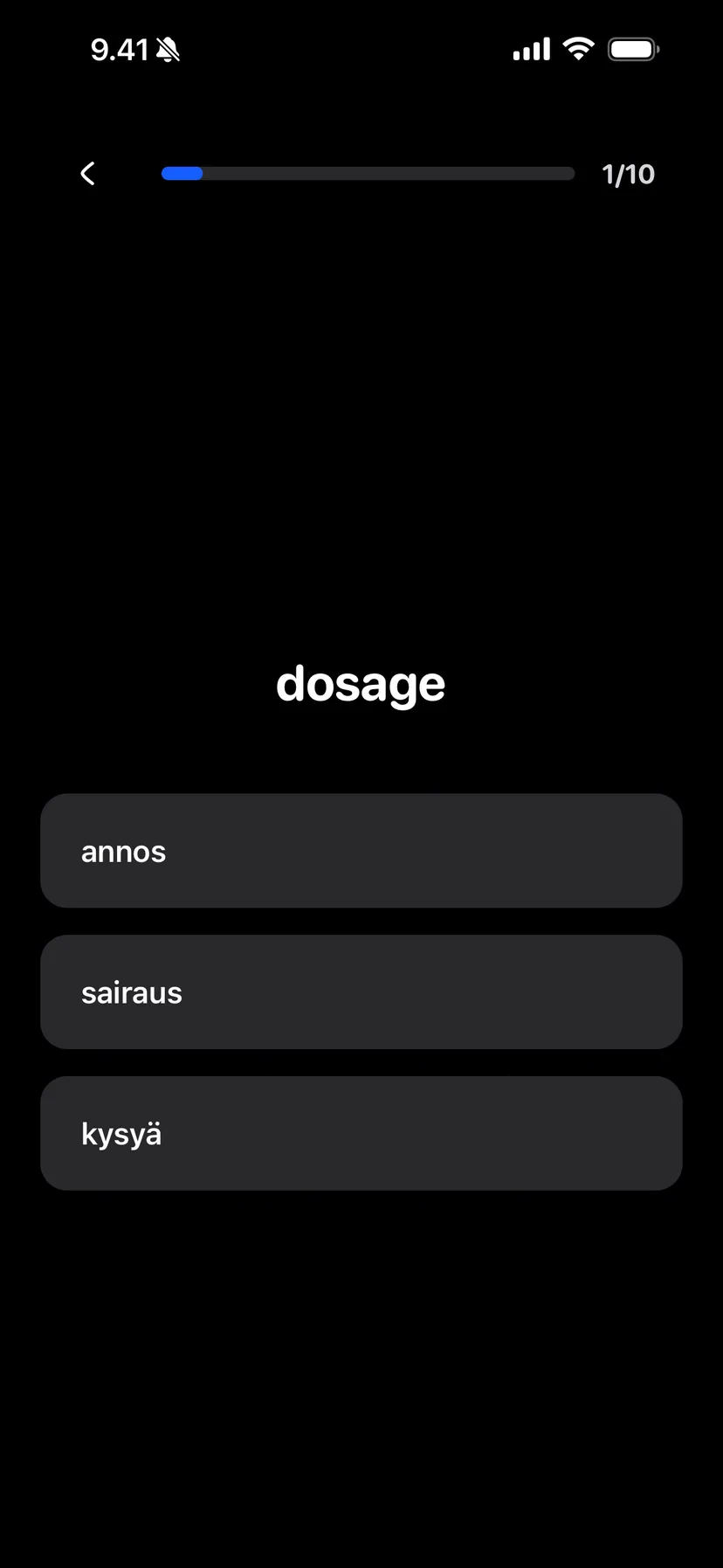
AI can speed that up. Take a page from First Aid, paste it in (or in Vocabbie's case, photograph it), and ask for cards. The AI reads the content, identifies what's testable, and drafts questions and answers. You then review them, cut the ones that are too vague or redundant, and keep the ones that match your actual gaps.
That workflow, snap or paste your source material, get a first draft of cards, then edit, gets you the benefit of self-generated material without all the manual typing. You still own the review process. You still decide what stays.
Realistic expectations
Flashcards won't replace practice passages. Full stop. The MCAT tests application in context, and you can only practice that by doing passages. Cards build the factual foundation. Passages train you to use it under pressure. You need both.
Start your flashcard habit early, three to four months out if you can. Ten to twenty minutes of Vocabbie review every morning is more valuable than a two-hour session once a week. The spacing is the point.