The GRE verbal section isn't just about reading comprehension or sentence structure; it's a deep dive into the English lexicon, often featuring words you might only see in classic literature or academic journals. If your goal is a top-tier score, you can’t ignore vocabulary. The good news? Flashcards are not only the most efficient way to master these challenging words, they’re practically designed for it.
Why is GRE vocabulary so hard?
GRE vocabulary is difficult because it frequently tests obscure words that aren't common in everyday conversation or even most professional settings. The test creators deliberately select words that challenge even well-read individuals, often focusing on nuanced meanings, synonyms, and antonyms that require precise understanding rather than just a vague familiarity. You're not just learning definitions; you’re learning context, connotation, and how words relate to each other.
For example, you might encounter words like churlish, quixotic, or pulchritude. Knowing the gist isn't enough; you need to grasp their exact usage to correctly answer Text Completion and Sentence Equivalence questions. These sections are a direct measure of your verbal dexterity and, crucially, your word power. Without a robust vocabulary, you'll be guessing, and on the GRE, guessing rarely pays off consistently.
Why are flashcards so effective for GRE vocabulary?
Flashcards are incredibly effective for GRE vocabulary because they combine active recall and spaced repetition, two powerful learning principles. Active recall forces your brain to retrieve information rather than passively reviewing it, which strengthens memory pathways, while spaced repetition optimizes review times so you see challenging words more frequently and easier ones less often. This method significantly boosts long-term retention compared to traditional re-reading or highlighting. As I’ve experienced myself, just staring at a list of words doesn't work. You need to actively engage with each term. This is why spaced repetition is essential for effective learning. You can learn more about this powerful technique in our post, spaced repetition: why your brain needs it.
Active recall is the act of trying to remember information from scratch, rather than simply recognizing it. When you look at a flashcard with "quixotic" on one side and force yourself to define it before flipping, you're practicing active recall. This effortful retrieval solidifies the memory. Research consistently shows that active recall is far more effective for long-term retention than passive review methods.
Spaced repetition is a learning technique where you review information at increasing intervals, right before you're about to forget it. It's often misunderstood, but its power lies in its timing. Instead of reviewing everything every day, you review less often as your memory for a particular item strengthens. This is particularly useful for a large, dense subject like GRE vocabulary. A 2008 study published in Applied Cognitive Psychology highlighted that using spaced repetition could double or even triple retention rates over time. This targeted review makes learning vocabulary much more efficient, helping you memorize vocabulary fast.
How do you make effective GRE flashcards?
To make effective GRE flashcards, focus on quality over quantity and include more than just a word and its definition. Your flashcards should be rich with context and connections. Don't just copy definitions; make them useful.
Here's my approach:
- Choose your words wisely: Don't just grab every word you don't know. Focus on words that appear frequently in GRE prep materials or are part of common GRE word lists. I always recommend starting with a reputable list from a major test prep company.
- Front of the card: The word. Simple, clean, and unambiguous. Don't put anything else on the front.
- Back of the card: Layers of meaning.
- Concise definition: Start with one or two clear, primary definitions.
- Synonyms/Antonyms: This is crucial for the GRE. Knowing related words helps with Text Completion and Sentence Equivalence questions. For churlish, you might list "rude, boorish" and "polite, genial."
- Example sentence: This is non-negotiable. An example sentence puts the word in context and helps you understand its usage. Make it memorable or even slightly silly. For quixotic, "His quixotic quest to save every stray cat in the city was admirable but impractical."
- Etymology (optional but helpful): Understanding word origins can sometimes help you remember difficult words or connect them to others. If "bene-" means good, then "benevolent" makes more sense.
- Personal association: If you can connect the word to something in your life, even better. The more connections your brain makes, the stronger the memory.
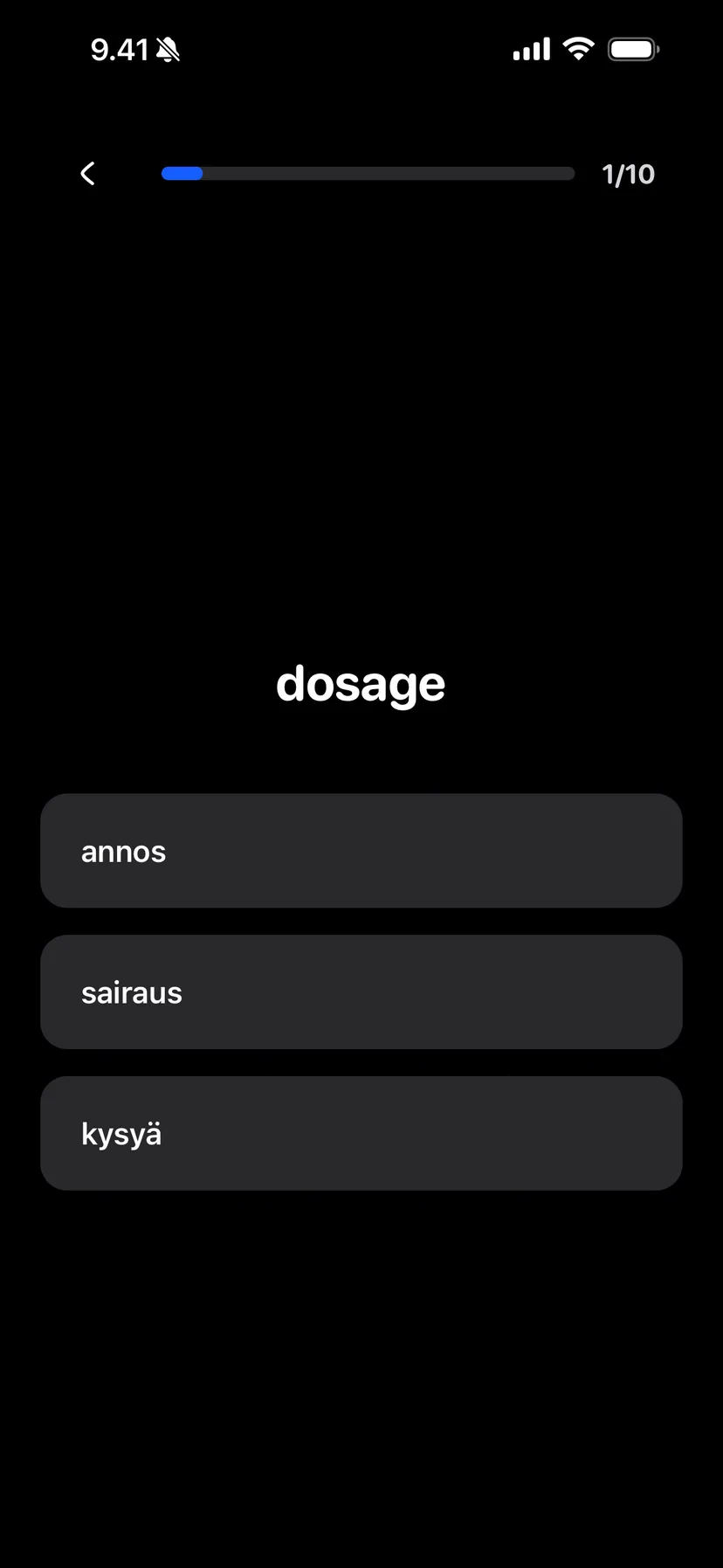
Remember, the goal isn't just to recognize the word, but to recall its meaning, usage, and nuance. Vocabbie, an AI flashcard app for iOS and Android, lets you easily create detailed flashcards like these, even suggesting definitions and example sentences, which saves a lot of time.
What's the best way to study GRE flashcards?
The best way to study GRE flashcards is to commit to consistent, daily sessions using a spaced repetition system and always prioritizing active recall. Cramming hundreds of words the week before the test is a recipe for forgetting. Little and often is the mantra here.
Here's how I recommend approaching your study:
- Study daily, even if for short periods: Consistency is far more effective than marathon sessions. Ten to fifteen minutes a day of focused flashcard review is more productive than two hours once a week. This builds a strong study habit.
- Use a spaced repetition system: This is where an app like Vocabbie truly shines. It tracks your progress and intelligently schedules words for review at optimal intervals. You don't have to guess which words to study; the system tells you. This is the most efficient way to learn new vocabulary and retain it long-term.
- Prioritize active recall: When you see a word, don't flip the card immediately. Pause. Try to define it, think of synonyms, and imagine it in a sentence. Only then check the back. If you got it wrong, mark it as difficult so the system shows it to you again sooner.
- Mix it up (interleaving): Don't just study one type of word. Mix new words with old ones, and maybe even throw in some math formulas if you're using flashcards for other subjects. This technique, known as interleaving, can actually make your learning more robust.
- Don't skip review days: The spaced repetition algorithm relies on consistent interaction. Skipping a day can throw off the schedule and make the system less effective. If you're struggling to focus, try some of the techniques in our post, how to actually focus while studying.
Mastering GRE vocabulary is a marathon, not a sprint. Flashcards, especially when powered by an intelligent system like spaced repetition, turn that marathon into a series of manageable, effective sprints. By leveraging these tools and methods, you’ll not only learn the words, you’ll truly know them, and that’s what will make a difference on test day.