We’ve all been there: staring down a test, heart pounding, convinced it’s nothing more than a high-stakes interrogation of our knowledge. We see tests as the finish line, the final judgment of our study efforts. But what if I told you that the act of testing yourself is not just an assessment, but one of the most powerful study techniques you have? It’s true. The research is clear: taking a test actually helps you learn.
What is the testing effect?
The testing effect is a phenomenon in cognitive psychology where actively retrieving information from memory, such as through self-testing, significantly improves long-term retention and understanding of that information. In simple terms, when you quiz yourself, you’re not just seeing what you know, you’re making your memory stronger. Researchers often call this "retrieval practice."
For decades, students and educators assumed that the best way to learn was through extensive re-reading and passive review. We’d highlight textbooks, summarize notes, and generally try to cram as much information into our heads as possible. While these activities feel productive, studies consistently show they are far less effective than retrieval practice. One landmark study by Karpicke and Roediger in 2008 demonstrated that students who spent more time testing themselves, even at the expense of re-studying, remembered significantly more material a week later. They remembered almost 50% more, in some cases. This isn't just about getting a good grade, it's about building a robust, accessible memory.
Why does testing make you smarter?
Testing yourself makes you smarter because it forces your brain to engage in active recall, which strengthens neural pathways and deepens your understanding. Unlike passive review, which allows your brain to skim over familiar material without deep processing, a test demands that you actively pull the information out. This effortful retrieval is what makes the memory stick.
Think of it like building muscle. If you just look at weights, you won’t get stronger. You have to actively lift them. The same goes for your memory. When you’re tested, your brain isn't just passively receiving information; it’s actively producing it. This process creates a stronger, more retrievable memory trace. Every time you successfully recall a piece of information, you reinforce the neural connections associated with that memory, making it easier to access next time. This is precisely why passive review vs active recall: why one works and one does not.
Beyond strengthening memory, testing also helps you identify gaps in your knowledge. When you attempt to recall something and can’t, that’s not a failure; it’s a crucial signal. It tells you exactly what you need to focus on next. This metacognitive benefit, knowing what you know and what you don't, allows you to study more efficiently, directing your efforts to where they’ll have the biggest impact.
How does the testing effect actually work in your brain?
The testing effect works in your brain by creating more pathways to a memory, associating it with more cues, and refining its representation in your mind. When you retrieve information, you’re not just accessing a single stored item; you’re engaging a network of related concepts and connections. This process of searching your memory for the answer actually reorganizes and strengthens the memory itself.
Imagine your brain’s memory as a vast library. Simply reading a book (passive review) might put it on a shelf. But testing yourself is like actively finding that book, taking it out, and then returning it, perhaps even adding a new label or cross-referencing it with other books. This makes the book easier to find next time. Furthermore, retrieval practice can help differentiate between similar concepts, reducing interference and making memories less susceptible to forgetting. The act of testing also helps consolidate memories from short-term to long-term storage, making them more resilient.
How can you use the testing effect to study better?
To harness the testing effect, integrate regular, low-stakes self-testing into your study routine, preferably using methods that encourage active recall and spaced repetition. The goal isn't just to prepare for a big exam, but to use testing as a continuous learning tool.
Here are some practical ways to apply it:
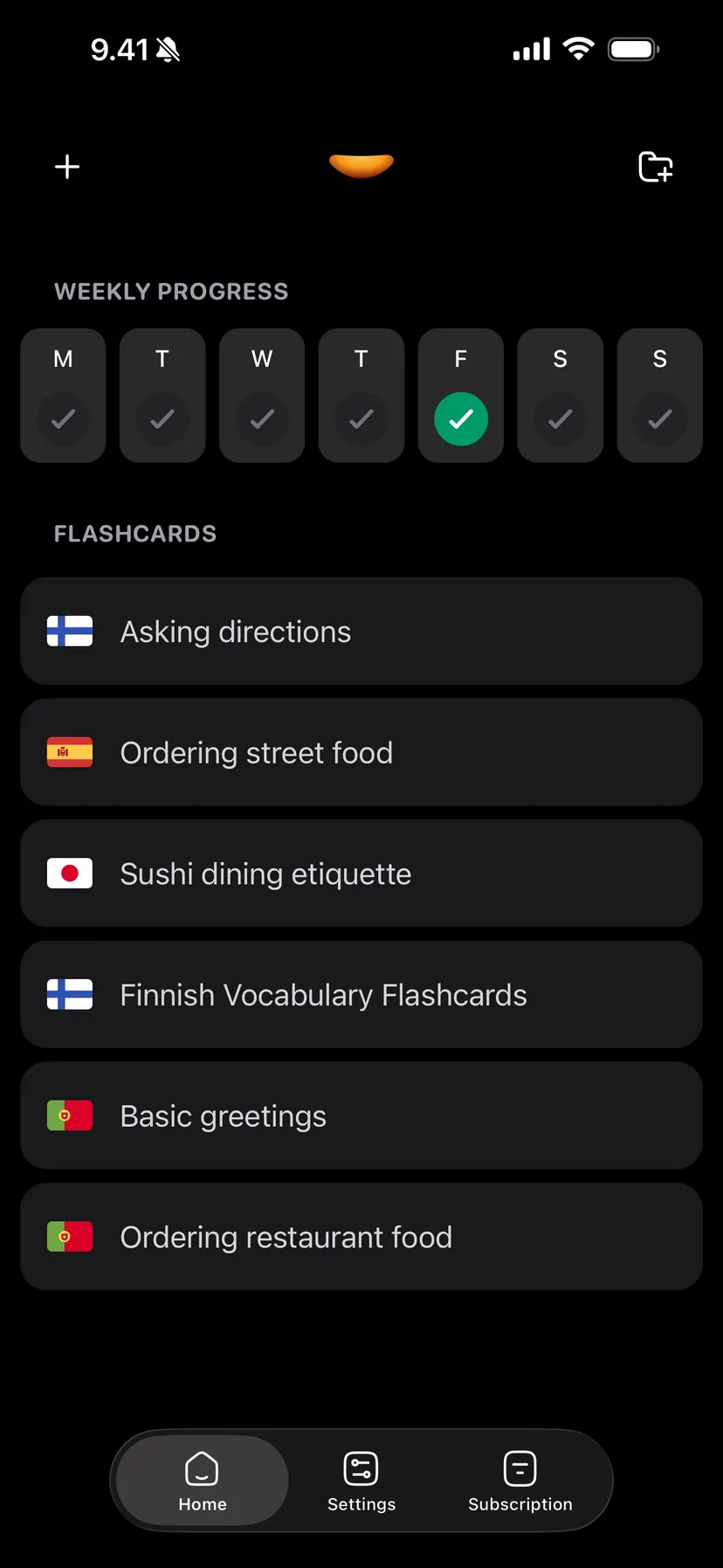
- Use flashcards relentlessly: Flashcards are the quintessential tool for retrieval practice. Instead of just flipping through them, make sure you’re actively trying to recall the answer before revealing it. For ultimate efficiency, use digital flashcards that incorporate spaced repetition algorithms. These systems, like Vocabbie, a language-learning app for iPhone, Android and the web, automatically show you cards you’re struggling with more often and space out those you know well. This strategy aligns perfectly with spaced repetition: why your brain needs it, ensuring optimal memory retention.
- Practice questions and mock exams: Don't save practice questions only for the week before your actual exam. Do them regularly throughout your learning process. Attempting problems without looking at the solution first is a powerful form of self-testing.
- Explain concepts out loud: Try to explain a topic to an imaginary student or even yourself. If you can articulate it clearly without notes, you've likely mastered it. If you stumble, you’ve found a knowledge gap.
- Turn notes into questions: As you take notes or after reading a chapter, convert headings and key ideas into questions. Then, later, try to answer those questions without looking back at your notes. This is a fantastic way to create your own "tests." Vocabbie can even help you with this by allowing you to turn your notes into flashcards with AI, automating the creation of retrieval practice material.
Embracing the testing effect means shifting your mindset from seeing tests as a scary evaluation to viewing them as a powerful learning opportunity. It’s not about performing perfectly every time; it’s about the active effort of retrieval, the identifying of weak spots, and the subsequent strengthening of your knowledge. So, next time you sit down to study, don't just re-read. Test yourself. Your brain will thank you for it.