Walk into any app store, type "flashcards," and you'll be swamped. Hundreds of apps promise to help you learn faster, remember more, and ace your exams. It's easy to get lost in the sea of features and claims. I've spent a lot of time testing these apps, not just as a casual user, but as someone deeply interested in how we learn. So, here's my honest take on the flashcard apps making waves right now, and what each is actually good for.
What should you look for in a flashcard app?
A great flashcard app goes beyond just showing you cards. It should incorporate principles proven to boost memory. The most important of these is spaced repetition, which is a learning technique where you review information at increasing intervals to move it into your long-term memory. Another critical element is active recall, which forces you to retrieve information from memory rather than just passively re-reading it. Without these, an app is just digital paper. When your flashcards aren't working, it often comes down to a lack of these core principles.
What is Anki best for?
Anki is best for serious learners who need deep customization and are willing to invest time into learning its interface. Anki is the undisputed king for power users, especially in fields like medicine or language learning. It's an open-source program that uses an incredibly robust spaced repetition algorithm to schedule your reviews. A 2008 study published in Science magazine, for example, highlighted the power of spaced repetition in improving long-term retention, a principle Anki masters.
What I love about Anki is the sheer control it gives you. You can create complex card types, integrate audio, images, and even code, and tweak the learning algorithm parameters. Many communities have built vast, high-quality shared decks for subjects like medical terminology or learning Japanese vocabulary. If you're studying for the MCAT or learning Korean with flashcards, Anki's community decks can be a goldmine.
However, Anki has a significant learning curve. Its interface feels dated, and setting up custom card types or syncing across devices can be frustrating. It's not the app you pick up and master in five minutes. If you're someone who gets intimidated by too many settings or prefers a sleek, modern design, Anki might feel clunky. For a deeper dive into how it stacks up, check out our comparison of Vocabbie vs Anki.
Who should use Quizlet?
Quizlet is best for casual study, collaborative learning, and quick concept review, especially for school-level subjects. Quizlet became popular for its sheer accessibility and user-friendly design. It's fantastic for creating simple flashcard sets, and its "Match" and "Gravity" games make studying feel less like a chore.
The biggest strength of Quizlet is its community. You can easily find pre-made sets for almost any topic, from high school history to basic French vocabulary. It's excellent for sharing sets with classmates or doing a quick review before a test.
My main issue with Quizlet is that its core learning mechanism, while present, isn't as robust as Anki's or other dedicated spaced repetition apps. While it offers "Learn" mode, it often leans more towards passive review than true active recall, which can hurt long-term memory. It's great for short-term gains, but for building a truly deep understanding or learning a language with flashcards, it often falls short. If you're debating between the two, we've got an honest take on Vocabbie vs Quizlet.
How does Vocabbie stand out?
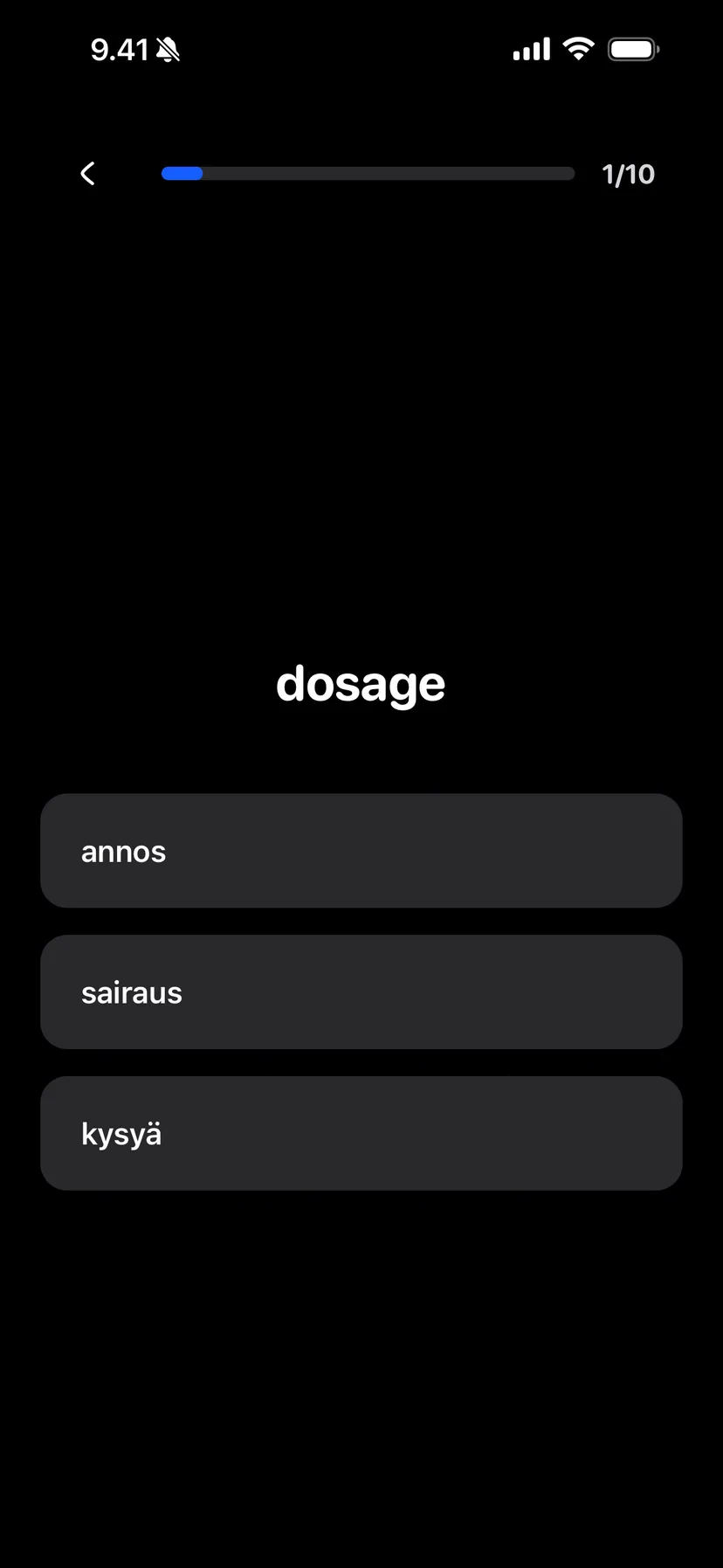
Vocabbie, a language-learning app for iPhone, Android and the web, stands out by blending powerful, research-backed learning techniques with modern AI convenience and a sleek, intuitive interface. We built Vocabbie because we saw a gap: powerful apps were too complicated, and easy-to-use apps weren't powerful enough for serious learners. Vocabbie takes the core principles of effective learning, like spaced repetition and active recall, and wraps them in a smart, accessible package.
Our AI is where Vocabbie truly shines. Instead of manually typing out every card, you can create flashcards from a photo of your notes or even generate them from a block of text. This feature is a game-changer for students converting lecture notes or textbook chapters into study material without the tedious manual input. (How to turn your notes into flashcards with AI and How to create flashcards from a photo explain how this works).
Vocabbie also includes smart study modes that adapt to your progress, ensuring you're always reviewing the right cards at the right time. It's designed for anyone from high school students learning vocabulary to university students tackling complex subjects like history or medicine. We aim to make effective, long-term learning as effortless as possible, removing the friction that often prevents people from sticking with flashcards. It offers the analytical power of Anki without the headache, and the user-friendliness of Quizlet with true long-term memory benefits.
How to choose the right flashcard app for you
The "best" flashcard app isn't one-size-fits-all. It depends entirely on your needs, your learning style, and your willingness to invest time in setup.
- If you're a power user who wants maximum control and don't mind a steep learning curve, Anki is likely your pick. It's ideal for very specific, long-term memory tasks where you need granular control over your learning.
- If you need quick, collaborative study for less intensive subjects or just want to make simple sets easily, Quizlet is a solid choice. It's great for group study sessions or reviewing basic concepts.
- If you want the power of spaced repetition and active recall, combined with modern AI features to streamline card creation and a beautiful, easy-to-use interface, then Vocabbie is built for you. It's the sweet spot for serious learners who want efficiency without sacrificing effectiveness.
Ultimately, the best app is the one you actually use consistently. Whether you choose a minimalist tool or one packed with AI features, the key is to embrace the principles of spaced repetition and active recall. These are what make any flashcard app truly effective.