We've all been there: the night before a big exam, coffee flowing, textbooks spread open, frantically trying to stuff every last fact into our brains. This is cramming, and it feels like it works. You might even ace that test. But what happens a week later, a month later, or even a year later? Most of that information vanishes.
The truth is, cramming can get you through a single exam, but it's a terrible strategy for actual learning and long-term retention. If you want knowledge that sticks for life, science points to a different path: spaced repetition. Let's look at the evidence.
What is cramming, and why does it feel like it works?
Cramming is the intense study of material over a short, continuous period, often right before an assessment. It feels effective because it creates an illusion of mastery due to the immediate familiarity with the material.
Cramming, also known as "massed practice," means trying to absorb a large amount of information in a single, intense session. Picture reading a textbook chapter repeatedly, or reviewing an entire course's notes the night before an exam. In the moment, everything feels fresh. You can recall facts quickly because they're in your short-term memory, creating a deceptive sense of true learning. This temporary familiarity can boost confidence, making cramming a tempting fallback, especially under pressure.
Does cramming actually work for long-term learning?
While cramming can lead to good performance on immediate tests, numerous studies show it is highly ineffective for retaining information beyond a few days. The information learned through cramming rapidly decays from memory.
The short answer is: almost never for long-term recall. Research consistently shows cramming helps pass an immediate quiz but fails for remembering anything weeks or months later. Ebbinghaus's classic work on the forgetting curve in the late 19th century showed how quickly information is lost without re-exposure. More recent research, like a 2008 study published in the Journal of Experimental Psychology: Learning, Memory, and Cognition, confirmed that students who crammed performed significantly worse on retention tests just a week after initial learning compared to those who used spaced study sessions. If you're serious about how to actually retain what you read, cramming isn't the answer.
What is spaced repetition?
Spaced repetition is an evidence-based learning technique where reviews of previously learned material are scheduled at increasing intervals over time to optimize long-term memory.
Instead of trying to memorize everything at once, spaced repetition strategically reintroduces information just as you're about to forget it. Imagine having a smart scheduler for your brain. You review a concept today, then again in three days, then a week, then a month. This systematic approach tackles the forgetting curve head-on. As you successfully recall an item, the interval until its next review grows longer. If you struggle, the interval shortens, making sure you see it again sooner. It's a highly efficient method for solidifying knowledge. To understand more about why your brain needs it, it's worth exploring the science further.
Why does spaced repetition work?
Spaced repetition works by strengthening memory traces through repeated active recall and leveraging the "testing effect," which reinforces learning precisely when information is on the verge of being forgotten.
Spaced repetition's effectiveness comes from several core cognitive principles:
- The Forgetting Curve: Hermann Ebbinghaus showed we rapidly forget new information. Spaced repetition directly counters this by prompting reviews just before a memory fades, resetting and reinforcing it.
- Active Recall: Each review within spaced repetition forces you to actively retrieve information. This "testing effect" is a powerful memory-strengthening exercise, far more effective than passive rereading. Understanding passive review vs active recall: why one works and one does not highlights this distinction.
- Desirable Difficulty: The slight struggle to recall after a delay, but before total forgetting, strengthens the memory when retrieval is successful. This "desirable difficulty" builds more robust recall than easy, immediate recall.
A comprehensive meta-analysis by Cepeda et al. in 2006 confirmed that distributed practice, or spaced repetition, consistently led to superior long-term retention across diverse learning materials and groups compared to massed practice like cramming.
How can I use spaced repetition effectively?
To use spaced repetition effectively, you need a system that intelligently schedules your reviews, typically using digital flashcards or dedicated apps that adapt to your learning progress.
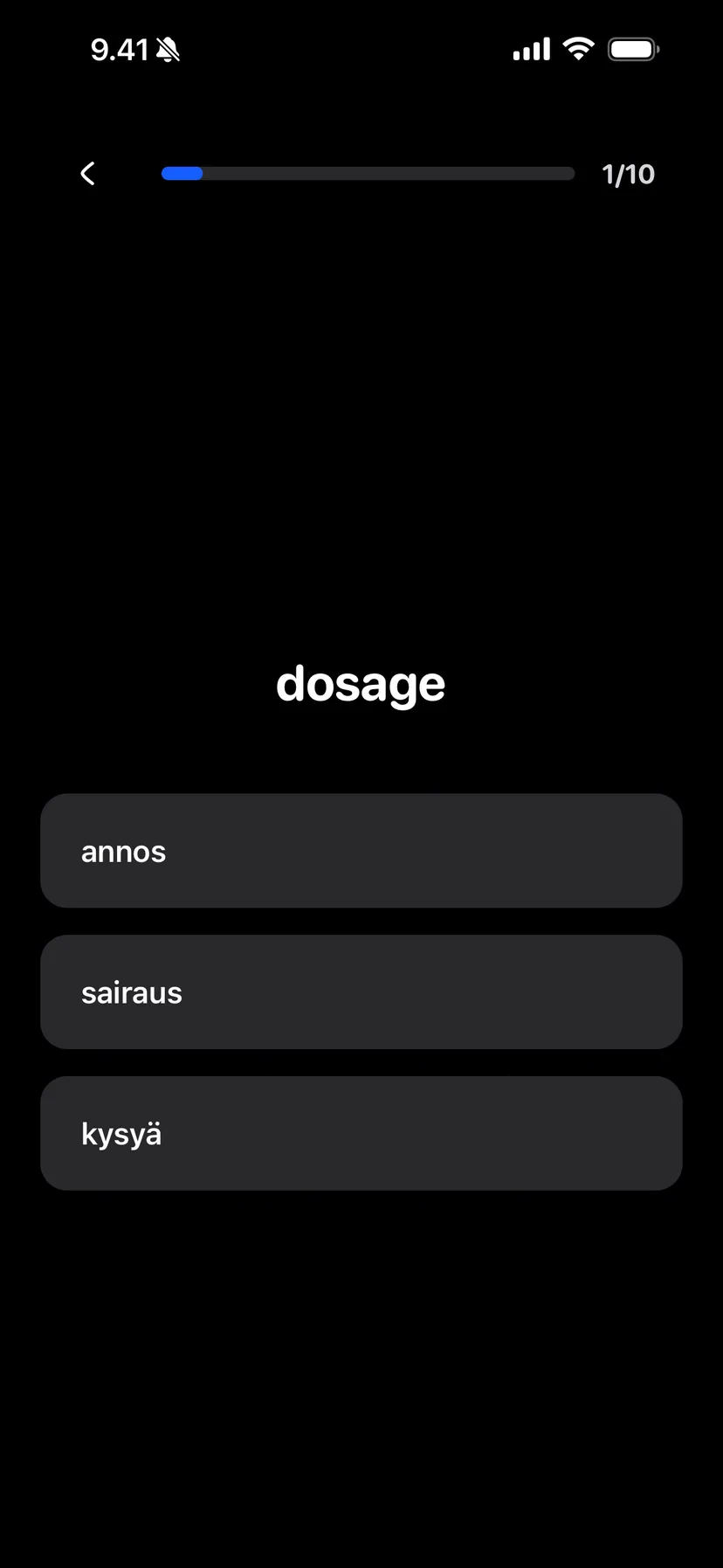
The most practical and effective way to implement spaced repetition is with digital flashcards. Trying to manually track review intervals for hundreds or thousands of facts would be a full-time job in itself. That's where tools like Vocabbie, a language-learning app for iPhone, Android and the web, come in. These apps use algorithms to present you with flashcards at optimized intervals based on your performance. Vocabbie also helps you create effective flashcards quickly, even turning your notes into flashcards with AI, which drastically reduces the setup time.
Here's how to get started:
- Create good flashcards: Focus on single concepts, with a clear question on one side and a concise answer on the other. What makes a good flashcard can guide you here.
- Be consistent: Dedicate a small amount of time daily to your reviews. Even 10-15 minutes can make a massive difference over weeks and months.
- Be honest with yourself: When reviewing a card, truly try to recall the answer before flipping it. If you got it wrong or struggled, mark it as such so the system can reschedule it sooner.
- Trust the algorithm: It can feel counterintuitive to not review things you feel you might forget, but the system is designed to push your recall at optimal moments.
Cramming offers a quick, fleeting illusion of mastery, good for getting through a single hurdle but leaving little lasting impact. Spaced repetition, on the other hand, builds robust, long-term knowledge brick by brick. It demands consistency and a little patience, but the payoff is immense: truly understanding and remembering what you learn, not just for the next test, but for the rest of your life. So, next time you're tempted to pull an all-nighter, remember the science. Investing a little time each day with tools designed for long-term learning will always beat the frantic rush.