Flashcards. Most of us have used them. Most of us have probably used them wrong. We scribble notes, copy definitions, and then wonder why hours spent flipping through cards don't translate into lasting knowledge. The truth is, the difference between a flashcard that supercharges your memory and one that simply wastes your time isn't subtle. It's fundamental.
I've seen countless students frustrated, believing flashcards "don't work" for them. But it's not the tool that's failing, it's often the way they're made and used. Let's fix that.
Why do most flashcards fail to help people learn?
Most flashcards fail because they serve as passive information dumps rather than active retrieval prompts. People often stuff too much information onto a single card or merely copy textbook definitions without processing the content. This turns study sessions into recognition exercises, not genuine recall tests.
Think about it: have you ever put an entire paragraph on the back of a flashcard? Or maybe a term on the front, and then the exact dictionary definition on the back? We’ve all been there. The problem with this approach is that when you see the front of the card, your brain doesn't have to work hard to generate the answer. It just has to recognize a familiar chunk of text. That's a huge difference. If you're struggling with this, you might be asking yourself, why your flashcards aren't working. The common culprits are too much information, lack of context, and not forcing yourself to actively retrieve the answer.
For instance, if you're learning Spanish and your card says "Front: 'Hola' / Back: 'Hello, a common Spanish greeting,'" you're not really testing yourself. You're just confirming what you already know. The brain needs a challenge to create stronger connections.
What is a good flashcard?
A good flashcard is a concise, focused question-and-answer pair that compels you to actively recall information, not just recognize it. It targets a single, atomic piece of information, forcing your brain to retrieve the answer from scratch.
Active recall is the mental process of retrieving information from memory without prompts, which significantly strengthens neural pathways and improves long-term retention. Instead of just reading, you're producing.
Here’s what a good flashcard looks like in practice:
- Single concept per card: One idea, one fact, one tiny piece of information. Don't try to summarize a whole lecture.
- Bad: "Photosynthesis: process by which plants convert light energy into chemical energy, using water and carbon dioxide, producing glucose and oxygen. Occurs in chloroplasts, has light-dependent and light-independent stages."
- Good: "What are the primary products of the light-dependent reactions of photosynthesis?" (Back: "ATP and NADPH")
- Question on the front, minimum answer on the back: The front should make you think. The back should be the most distilled, direct answer possible.
- Bad: "Term: Mitochondria / Definition: The powerhouse of the cell, where cellular respiration occurs."
- Good: "What cellular organelle is responsible for ATP synthesis via cellular respiration?" (Back: "Mitochondria")
- Use your own words: When possible, rephrase concepts in a way that makes sense to you. This ensures you understand the information, not just memorize its wording. If you're learning medical terminology, for example, don't just copy definitions. Understand the root words and how they combine.
How do you create effective flashcards?
To create effective flashcards, break down complex topics into atomic facts, phrase the front of the card as a question, and ensure the back provides the minimum necessary answer. This approach optimizes for active recall and makes your study sessions far more productive.
Here are some steps to follow:
- Break down information into atomic facts. As you read a textbook or attend a lecture, identify the core, irreducible facts or concepts. Each of these becomes a potential flashcard.
- Formulate a clear question for the front. The question should directly test your understanding of that atomic fact. Avoid vague prompts.
- Provide the shortest possible answer on the back. Resist the urge to add extra context or related information. If you need more detail, make another flashcard.
- Incorporate visual cues or mnemonics where appropriate. For some learners, a small sketch or a memorable acronym can significantly boost recall.
- Review regularly and critically. Don't just flip through them. Really try to answer before you look. If you get it wrong, mark it as difficult.
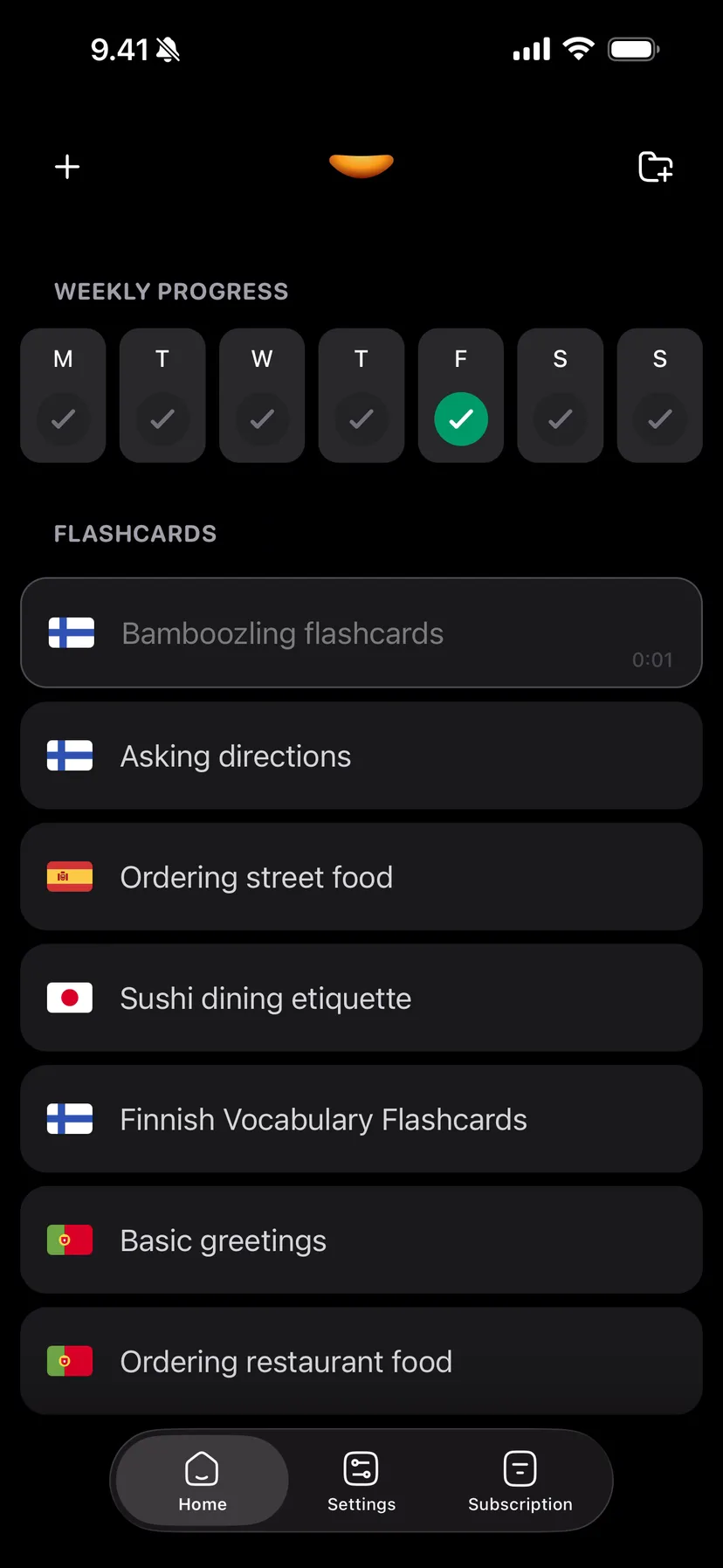
This structured approach is what truly transforms your learning. And yes, it can be time-consuming to craft these perfect cards manually. This is where tools like Vocabbie, a language-learning app for iPhone, Android and the web, become incredibly powerful. Our AI can help you turn your notes into flashcards with AI by extracting key concepts and generating questions for you, saving you time and ensuring you hit these best practices.
What's the role of spaced repetition and deeper understanding?
Spaced repetition optimizes review timing by presenting information at increasing intervals, while deeper understanding comes from connecting new information to existing knowledge and truly grappling with its meaning, going beyond surface-level facts. Good flashcards are the building blocks for both.
Once you have your well-crafted flashcards, the next step is how you review them. Simply going through a stack repeatedly isn't efficient. This is where spaced repetition comes in. Research, famously originating with Hermann Ebbinghaus in the late 19th century and refined by subsequent studies, consistently shows that reviewing information at increasing intervals dramatically improves retention. You review easy cards less often and difficult cards more frequently. This scientific approach is precisely why spaced repetition is so effective for long-term memory. It's about optimizing your review time to hit information right as you're about to forget it.
Beyond just recalling facts, effective flashcards contribute to deeper understanding when they force you to engage with the material. They shouldn't just ask "What is X?" but sometimes "Why does X happen?" or "How does X relate to Y?". For example, instead of just "Define osmosis," a better card might be "How does osmosis contribute to turgor pressure in plant cells?" This forces you to connect concepts, building a robust network of knowledge instead of isolated data points.
Ultimately, a good flashcard isn't just a piece of paper or a digital screen. It's a precisely engineered query designed to interrogate your memory, strengthen connections, and build lasting understanding. Stop wasting time on passive "studying" and start building flashcards that truly work for you.