The bar exam feels like climbing Mount Everest while juggling a library. The sheer volume of law you need to know, recall instantly, and apply precisely is intimidating. Many test-takers try to memorize everything, often drowning in outlines and passively re-reading notes. I’ve been there, and I can tell you that flashcards, used correctly, can be your secret weapon to navigate this beast without losing your mind.
Why are flashcards so effective for the bar exam?
Flashcards are effective for the bar exam because they force you into active recall and leverage spaced repetition, two powerful learning strategies essential for long-term retention of legal rules and definitions. Unlike passively reading your outline, flashcards make you produce the answer, which solidifies the memory. Passive review vs active recall: why one works and one does not explains why this difference matters.
For the bar, you're not just learning concepts; you’re memorizing specific legal rules, elements, exceptions, and distinctions. This is where flashcards shine. Every time you review a card, you’re pulling that information from your brain, strengthening the neural pathways. With thousands of rules to remember, relying on active recall is the only way to ensure you can retrieve the correct legal standard on exam day. Coupled with spaced repetition, which smartly schedules your review sessions based on your recall performance, flashcards ensure you don't just learn a rule once, but commit it to long-term memory. Spaced repetition: why your brain needs it dives deeper into the science behind this powerful technique.
What information should you put on bar exam flashcards?
You should put specific legal rules, their elements, important definitions, exceptions, and key distinctions between similar concepts on your bar exam flashcards. Avoid putting entire paragraphs of information on a single card; instead, break complex rules into their constituent parts.
Here’s what I mean:
- Rules: For example, on the front, you might have "What is the rule for battery?" On the back: "Harmful or offensive contact with another's person, causing injury, with intent."
- Elements: Break down multi-part tests. Front: "Elements of adverse possession?" Back: "Actual, Open & Notorious, Hostile, Exclusive, Continuous (AONHEC) for the statutory period."
- Definitions: Front: "Define mens rea." Back: "The mental state or intent of the defendant at the time of the crime."
- Exceptions & Defenses: Front: "What are the common law defenses to defamation?" Back: "Truth, absolute privilege, qualified privilege."
- Key Distinctions: Front: "Difference between larceny and embezzlement?" Back: "Larceny: taking and carrying away the personal property of another with intent to permanently deprive. Embezzlement: lawful possession initially, then fraudulent conversion."
The goal is precision. Your flashcards should mimic the exact type of information you need to recall for multiple-choice questions or to articulate in an essay. Think about the shortest, most accurate way to state a rule or definition. If a card feels too dense, it probably is. Break it down. Remember, how to make good flashcards emphasizes brevity and specificity for a reason.
How do you make flashcards for the bar exam without creating thousands?
To avoid creating an unmanageable number of flashcards for the bar exam, focus on high-yield topics, condense information from your outlines, and leverage AI tools to help generate cards from your study materials. It's not about making a card for every sentence, but for every testable concept.
Here’s my strategy:
- Prioritize High-Yield Topics: Bar exam prep courses often highlight topics that appear frequently. Start there. Don't feel obligated to make cards for obscure, low-frequency issues until you've mastered the foundational concepts.
- Use Your Outlines as Your Source: Instead of making flashcards directly from textbooks or barbri lectures, create them from your own condensed outlines. Your outline is already your distilled version of the law, making it easier to identify core rules.
- Condense, Don't Copy: When you find a rule in your outline, don't just copy it verbatim onto a card. Rephrase it in your own words if possible, or boil it down to its most essential elements. Your flashcard should trigger recall, not be the entire explanation itself.
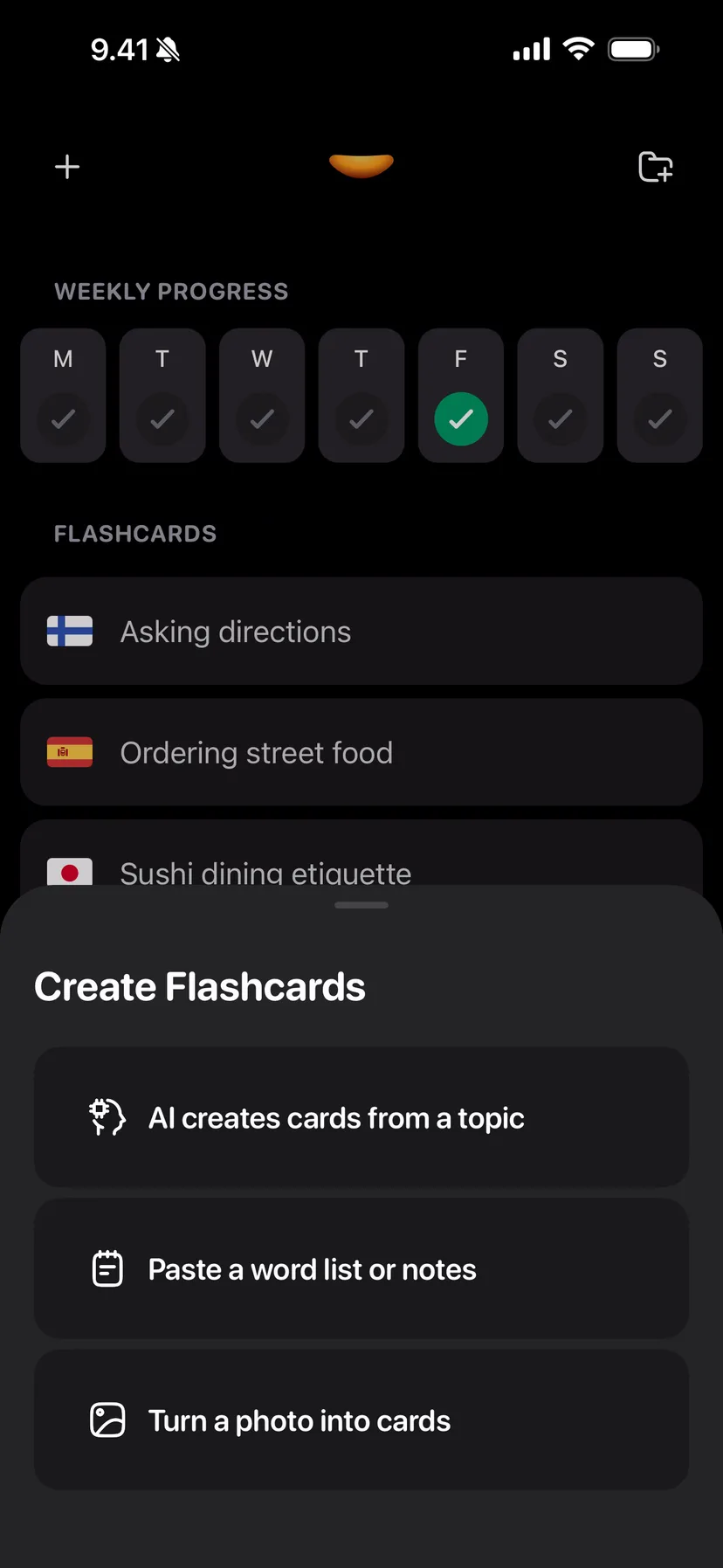
- Leverage Technology: Manually creating hundreds, if not thousands, of flashcards is a huge time sink. This is where Vocabbie, an AI flashcard app for iOS and Android, really comes in handy. You can upload your notes or outlines, and its AI can suggest flashcards for you, saving you hours of tedious work. This allows you to focus on learning rather than just creating. How to turn your notes into flashcards with AI offers practical advice on this.
- Focus on "Why Not" Cards: For rules with many exceptions, consider a card like: Front: "When is the warranty of merchantability not implied?" Back: "As is" clauses, obvious defects, buyer's examination. This forces you to think about the boundaries of a rule.
How can you integrate flashcards into your bar prep schedule effectively?
You can integrate flashcards effectively into your bar prep by treating them as short, daily micro-study sessions rather than a separate, large block of time. Consistency and frequency are far more important than marathon flashcard sessions.
Aim for 15-30 minute review sessions throughout the day. This could be during your commute, while waiting for coffee, or as a warm-up before tackling essays. Because digital flashcard apps like Vocabbie are on your phone, you can access your deck anywhere, anytime.
Don’t try to review every single card every day. That’s why spaced repetition is so critical; it presents you with the cards you’re most likely to forget, optimizing your study time. Trust the algorithm.
I recommend cycling through subjects. Maybe dedicate Monday to Contracts and Torts, Tuesday to Constitutional Law and Criminal Law, and so on. This prevents burnout and keeps things fresh. The bar exam demands both breadth and depth, and spaced repetition with flashcards is one of the most efficient ways to achieve it without succumbing to the overwhelming pressure. Good luck, you've got this.