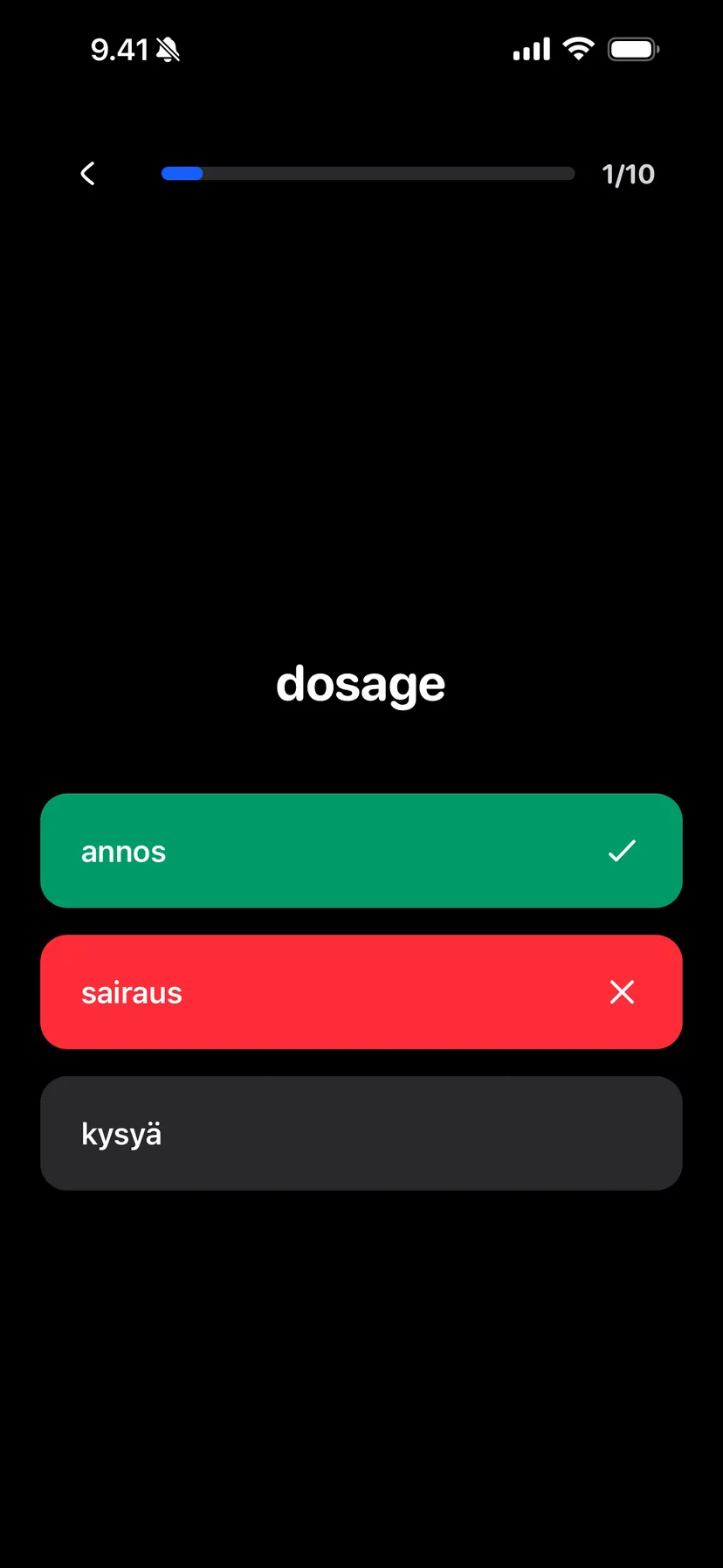
Medical school. It is a firehose of information, an unending torrent of anatomy, physiology, pharmacology, pathology, and clinical reasoning. You’re expected to absorb a volume of content that would make most people’s heads spin, and then not just memorize it, but truly understand and apply it. Many students turn to flashcards, thinking they're a magic bullet, only to drown in thousands of poorly made cards or a never-ending review queue. But what if I told you that flashcards aren't just useful, they're essential for medical studies, if you use them right?
This isn't about rote memorization; it's about building a robust, interconnected knowledge base that you can recall under pressure. And flashcards, when used strategically, are your best weapon.
Why are flashcards so effective for medical content?
Flashcards are effective for medical content primarily because they leverage active recall and spaced repetition, two of the most powerful learning strategies for long-term memory. Active recall forces your brain to retrieve information from scratch, strengthening neural connections, while spaced repetition ensures you review material just as you're about to forget it, maximizing retention efficiency.
Think about it: passive reading of textbooks or notes feels productive, but it often leads to recognition, not true recall. When you see an answer on the back of a flashcard, you’re engaging in active recall. This isn't just about 'knowing' the answer; it's about the mental effort of generating it. This process makes the memory stick. Research consistently shows that active recall leads to significantly better long-term retention than re-reading or passive review.
How do you make flashcards that actually stick?
Effective flashcards aren't just definitions; they are concise, self-contained questions that force deep thought and connections. A common mistake is creating flashcards that are too broad or too simple, leading to thousands of low-yield cards.
Here is how to make effective medical flashcards:
- Focus on "why" and "how" over "what": Instead of "What is a macrophage?", ask "How does a macrophage engulf pathogens, and what specific receptors are involved?" or "Why does inflammation lead to swelling?" This forces you to understand mechanisms, not just definitions.
- Break down complex topics: One flashcard should ideally test one discrete piece of information or a single concept. If a concept has multiple steps, create a card for each step or a card that asks you to explain the entire process in your own words.
- Use images and diagrams: Visuals are incredibly powerful in medicine. Many medical concepts are inherently visual. For example, instead of just describing the parts of the heart, use a diagram and label each part as a question on your card. Or show a histological slide and ask to identify the tissue type.
- Context is everything: Link new information to what you already know. If you are learning about a new drug, connect it to the disease it treats, its mechanism of action, and potential side effects. A good flashcard for a drug might be "What is the mechanism of action of Metformin, and what are its main side effects?"
- Transform your notes into questions: As you take notes in class or read a textbook, immediately think about how you can turn that information into a question. An AI flashcard app like Vocabbie, an AI-powered flashcard app for iOS and Android, can even help you create flashcards from your notes using AI, saving precious time.
How do you manage the sheer volume of medical flashcards?
The biggest challenge in medical school isn't just making flashcards, it's managing the overwhelming number of them. The solution is rooted in a principle known as spaced repetition. Spaced repetition is a learning technique where you review previously learned material at increasing intervals over time, optimizing retention and reducing study time. It is the only way to handle the volume.
Without a spaced repetition system, you're essentially reviewing everything all the time, which is inefficient and unsustainable. A good spaced repetition system, like the one built into Vocabbie, prioritizes your learning by scheduling cards for review just before you're likely to forget them. This means you spend less time on information you know well and more time on challenging concepts.
Here's how to integrate it into your workflow:
- Commit to daily reviews: Even 30-60 minutes every day is far more effective than cramming once a week. Consistency is key. Your spaced repetition algorithm needs daily input to work its magic. This also helps you build a study habit that actually lasts.
- Don't skip days: Missing a day means the algorithm gets out of sync, and you'll end up with a much larger review queue, making it harder to catch up.
- Be honest with yourself: When reviewing a card, if you struggled even a little, mark it as difficult. Don't trick yourself into thinking you know it perfectly. This honesty feeds the algorithm, ensuring you see that card again sooner.
- Integrate new cards gradually: Don't add hundreds of new cards in one sitting. Break down new content into manageable chunks and add a reasonable number of new cards each day to avoid overwhelming your review queue.
What is the best way to review medical flashcards for deep understanding?
Reviewing flashcards isn't just about flipping them over; it's about actively engaging with the material. When you encounter a card, don't just recall the answer; try to explain it out loud in your own words.
Here are my top tips for deep understanding during review:
- Explain out loud: Before flipping the card, articulate your answer as if you were teaching it to someone else. This solidifies your understanding and reveals gaps in your knowledge more effectively than just thinking the answer.
- Connect concepts: As you answer a card, actively think about how this information relates to other topics you've learned. For example, if you're reviewing a pathogen, consider what antibiotic would treat it, or what organ system it typically affects. This is a form of interleaving, the study technique most people ignore, and it builds a stronger, more interconnected knowledge network.
- Don't just recognize, recall: If you see the answer and think "Oh yeah, I knew that," but couldn't produce it from scratch, you didn't truly know it. Be strict with yourself. Mark it as "hard" or "again."
- Utilize feedback: If you get an answer wrong, don't just move on. Understand why you got it wrong. What was the misunderstanding? Go back to your notes or textbook briefly to clarify, then try the card again.
Medical school is an endurance race, not a sprint. Flashcards, powered by smart algorithms and your diligent effort, are not just a study tool; they are a long-term memory cultivation system. Approach them with intention, create them thoughtfully, and commit to consistent review, and you'll build an incredible foundation of medical knowledge that will serve you well for years to come.