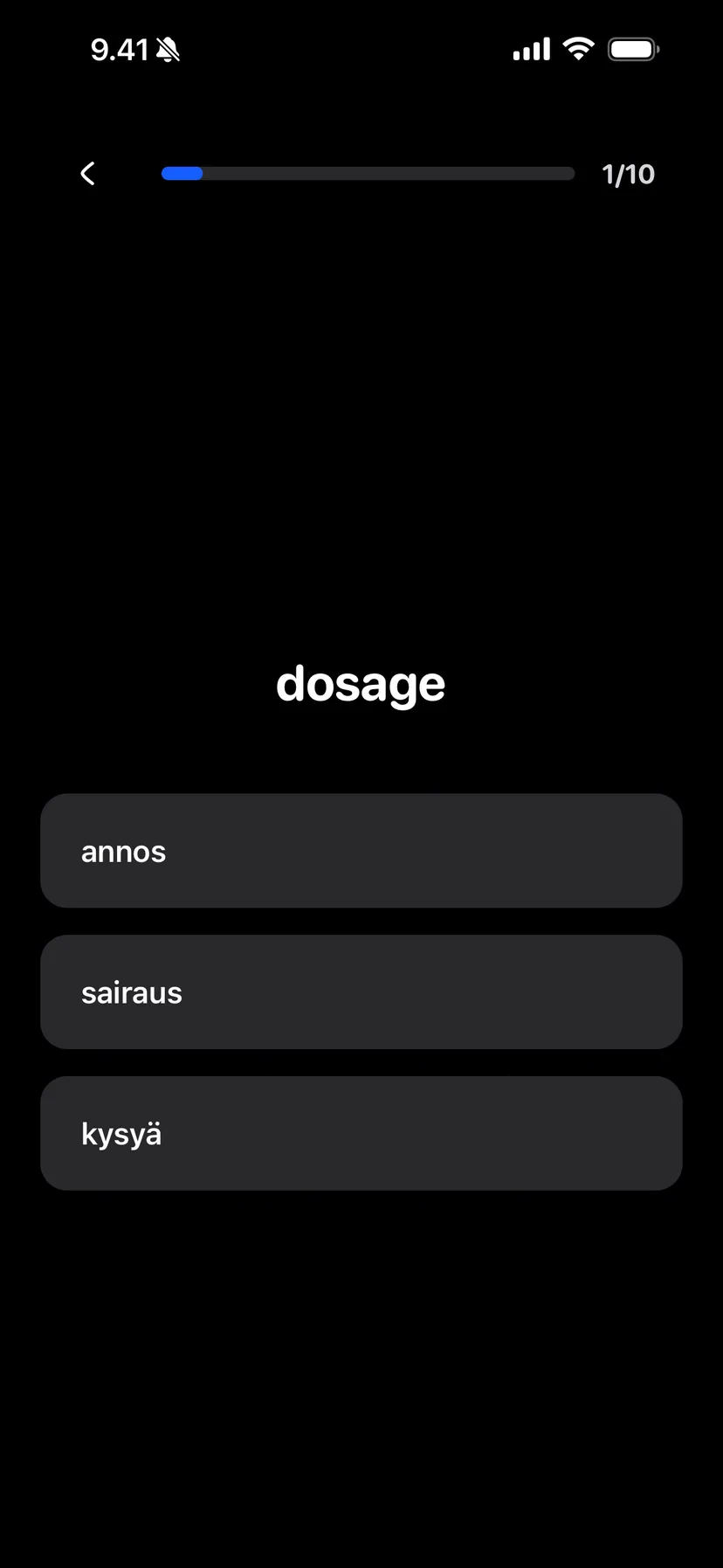
The first time I stared at a page of medical terminology, my eyes glazed over. Cardiomyopathy? Nephrolithiasis? Otorhinolaryngology? It felt less like studying a new subject and more like deciphering an alien language. If you're nodding along, you're not alone. Medical terminology is tough, but here's the secret: it's not insurmountable. In fact, it's highly systematic, and the best way to conquer it is the same way you'd tackle any new language: with flashcards.
Why medical terminology feels so hard, and why it's not impossible
Why does it feel so intimidating? Because many of us try to memorize each entire word as a standalone entity. But medical terms are rarely monolithic. They are usually built from a combination of prefixes, roots, and suffixes, each carrying a specific meaning. Think of it like Lego bricks. Once you learn what "cardio-" means (heart), "-itis" means (inflammation), and "-pathy" means (disease), suddenly "carditis" (inflammation of the heart) and "cardiomyopathy" (disease of the heart muscle) make perfect sense. This structured nature is why flashcards are such a powerful weapon.
The flashcard advantage
Flashcards aren't just for rote memorization. They are a proven method for active recall, which is how your brain truly embeds information. When you see a term and have to actively retrieve its meaning, you strengthen those neural pathways. This is the very essence of how to actually learn a language with flashcards, and medical terminology is no different. You're learning a specialized dialect.
How to create effective medical terminology flashcards
So, how do you make flashcards that actually work for medical terms?
First, break it down. Don't try to cram "Pneumonoultramicroscopicsilicovolcanoconiosis" onto one card. Instead, create separate cards for common prefixes, suffixes, and root words.
- Front: 'cardio-' Back: 'heart'
- Front: '-itis' Back: 'inflammation'
- Front: 'nephr-' Back: 'kidney'
Then, create cards for the whole terms, but still include the breakdown.
- Front: 'nephritis' Back: 'Inflammation of the kidney (nephr- [kidney] + -itis [inflammation])'
Visuals help tremendously. If you are learning "osteoblast" (bone-forming cell), find a simple diagram or even sketch a bone cell on the back of your card. Context matters too. Instead of just a definition, add a short, simple sentence or a clinical example. For "hypoglycemia", you might put "low blood sugar; often seen in diabetics".
Making all these cards by hand can be tedious. This is where modern tools shine. With an app like Vocabbie, you can turn your notes into flashcards with AI quickly. Imagine taking a photo of a textbook page or your class notes and having smart flashcards generated for you, often identifying key terms automatically. It saves so much time that would otherwise be spent on mere transcription.
Study strategies that really stick
Having great flashcards is only half the battle. How you use them is just as important.
The absolute cornerstone of learning any vocabulary, especially medical, is spaced repetition: why your brain needs it. This isn't just a fancy phrase; it's how your brain naturally optimizes memory. Flashcard apps built with spaced repetition, like Vocabbie, show you cards you are struggling with more often and cards you know well less often. This personalized review schedule is incredibly efficient and prevents you from forgetting what you have already learned. Trying to study without it is like trying to fill a leaky bucket.
Don't just stick to one body system at a time. Once you have a foundational understanding, start interleaving: the study technique most people ignore. Mix terms from the cardiovascular system with terms from the nervous system. This forces your brain to work harder, distinguishing between similar concepts and reinforcing your understanding across different domains. It feels harder in the moment, but the long-term retention is far superior.
Finally, be consistent. Short, daily review sessions are far more effective than cramming once a week. Even 15-20 minutes a day with your flashcards can build a strong foundation over time. If you are struggling to keep up, learning how to build a study habit that actually lasts is key. The goal isn't just to "know" the terms for a test; it's to integrate them into your working knowledge.
Beyond rote memorization
While flashcards are fantastic for memorization, remember that medical terminology isn't just a list of words. Each term is a key that unlocks a concept in anatomy, physiology, or pathology. As you learn new terms, try to mentally, or even physically, connect them to the bigger picture. Where is the "nephr-" in the body? What does "inflammation" actually do? The more you contextualize, the deeper your understanding will become, and the easier it will be to recall the terms when you actually need them in a clinical setting.
Learning medical terminology feels like a daunting task at first, but it's a learnable skill, not an innate talent. By breaking down complex words, creating smart, visual flashcards, and employing proven study techniques like spaced repetition and interleaving, you will build your medical vocabulary faster and more effectively than you thought possible. It takes discipline, sure, but the right tools and strategies make all the difference. Get started, and watch those "alien" words transform into a language you speak with confidence.