The digital world is awash with AI study tools, each promising to revolutionize how you learn. From chatbots that explain complex topics to apps that summarize entire textbooks, it feels like the future of education is already here. But with so many options, how do you know what’s actually worth your precious study time? I’ve spent a lot of time testing these tools, and here’s my honest take on what works and what simply creates an illusion of productivity.
What makes an AI study tool genuinely useful?
A truly useful AI study tool actively promotes deep learning and efficient retention, rather than just automating tasks. The best tools don't do the thinking for you, but rather help you think better. This means they often incorporate principles like active recall and spaced repetition, which are scientifically proven to improve memory.
Are AI note summarizers helpful for learning?
AI note summarizers are not truly helpful for learning new material, though they can be useful for quickly grasping the gist of something you already understand. These tools take your notes, articles, or even entire books and condense them into shorter versions. While this sounds efficient, it often bypasses the mental effort required for actual comprehension and retention. When you summarize text yourself, you’re forced to identify key concepts, rephrase them in your own words, and make connections. This active process is where learning happens. Tools that do this for you encourage passive consumption, which is far less effective than active engagement for long-term memory. If you want to understand why passive methods fail, read about passive review vs active recall.
Do AI chatbots improve understanding?
AI chatbots can improve understanding by providing quick explanations, definitions, and examples, acting as a readily available study buddy. They are excellent for clarifying confusing concepts or getting a different perspective on a topic. For instance, if you're struggling with a particular historical event or a complex scientific theory, asking a chatbot to explain it in simpler terms can be incredibly beneficial. However, relying on them too heavily can be a trap. The act of formulating a question, searching for an answer, and processing it yourself builds a stronger neural pathway than simply having an answer handed to you. Use them to unblock your understanding, not to replace your own research.
How effective are AI flashcard generators for studying?
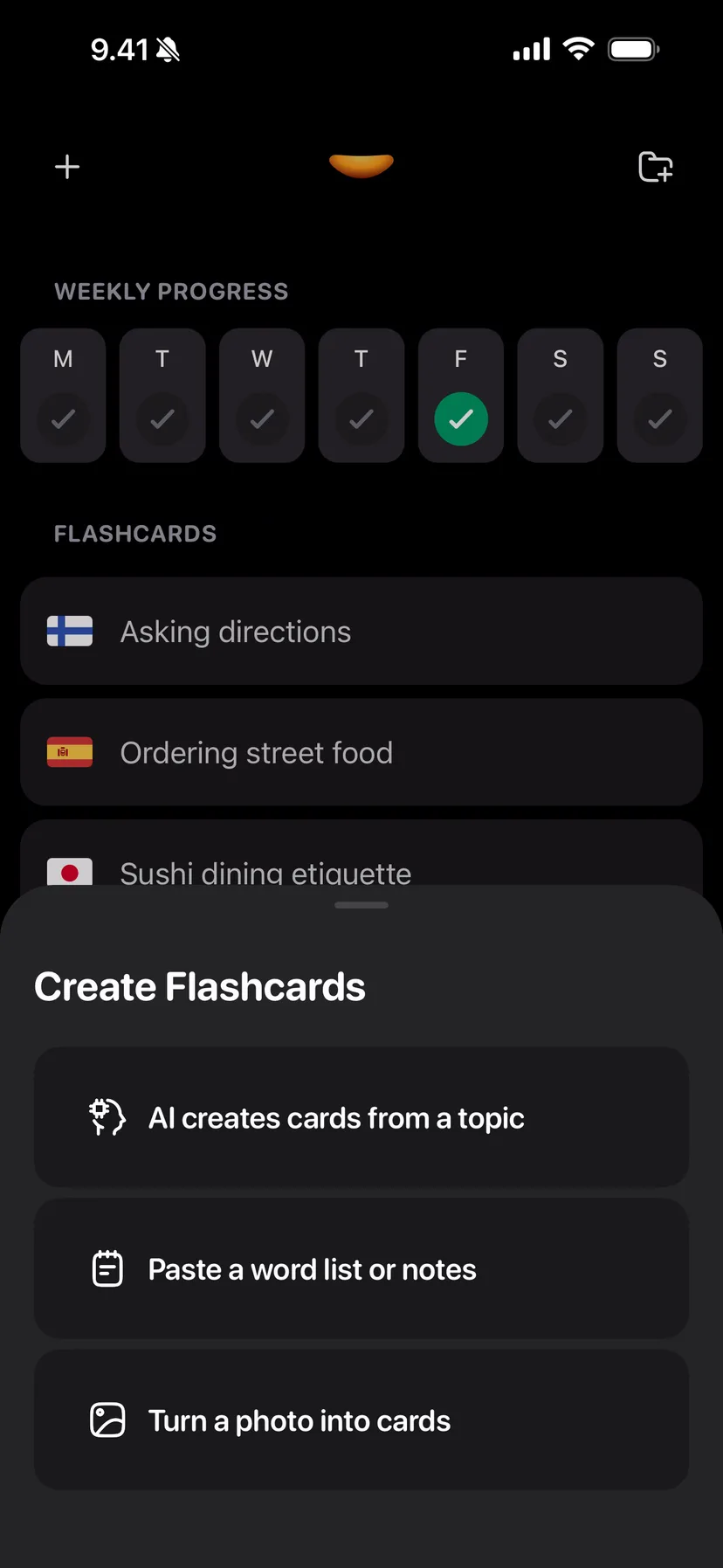
AI flashcard generators are exceptionally effective for studying because they directly facilitate active recall and spaced repetition, the cornerstones of strong memory formation. These tools take your study materials (notes, PDFs, articles) and automatically create flashcards. This automation saves immense time compared to manual card creation, letting you focus on the learning itself. For example, Vocabbie, a language-learning app for iPhone, Android and the web, can analyze your text and instantly generate flashcards with questions and answers. This means you get to spend more time testing yourself and less time formatting. Research consistently shows that testing yourself, particularly with spaced repetition, dramatically improves retention. Spaced repetition works by showing you information at increasing intervals, ensuring you review it just before you’re about to forget. This makes tools that create and manage flashcards, especially those with AI assistance, highly valuable. If you want to learn how this works, check out how to turn your notes into flashcards with AI.
Are AI essay and writing assistants useful for learning?
AI essay and writing assistants are generally not useful for learning academic content, as they often bypass the critical thinking, research, and writing skills necessary for true comprehension. These tools are designed to produce output, not to foster input and processing for the student. If you use an AI to write an essay for you, you're outsourcing the very process that builds understanding and strengthens analytical skills. While they can help with grammar checks or rephrasing sentences, using them for content generation short-circuits your own learning. Focus on developing your own writing skills; that’s where the real learning happens.
Do AI practice question generators help you learn?
AI practice question generators are very helpful for learning because they allow you to apply your knowledge and identify specific areas where your understanding is weak. After you've studied a topic, being able to generate unique practice questions helps solidify your comprehension and reveals gaps in your knowledge. Unlike static practice tests, AI can create an endless supply of variations, ensuring you’re not just memorizing answers but truly understanding the underlying concepts. This active testing forces your brain to retrieve information, which is a powerful memory-building exercise. Think of it as a personalized tutor constantly quizzing you on what you need to know most.
What is the most important feature an AI study tool can have?
The most important feature an AI study tool can have is the ability to facilitate active recall and spaced repetition. These two principles are backed by decades of cognitive science. Active recall is the process of retrieving information from memory, rather than passively rereading it. Spaced repetition optimizes this process by scheduling reviews at progressively longer intervals. Tools that effectively combine these, like AI flashcard apps, compel you to engage with material in a way that truly sticks. They don't just present information; they make you work for it, which is exactly what your brain needs to build lasting knowledge.
When evaluating any new AI study tool, ask yourself: Does this tool encourage me to actively engage with the material, or does it do the heavy lifting for me? The most useful AI tools are those that enhance your effort, not those that eliminate it. Choose tools that empower your brain to work harder, smarter, and more efficiently.